Why Connected Appliances Create More Customer Questions and How to Solve Them
Traditional appliances were simple by necessity — a dial, a thermostat, not much to configure. Connected appliances offer more features, personalization, and automation, which is exactly why customers buy them. But every added feature is also a new point of possible confusion.
The customer experience continues long after delivery, through unboxing, installation, setup, connectivity, everyday use, troubleshooting, and maintenance. At each stage, most snags aren’t technical failures — they’re information-access problems. The solution isn’t more support staff. It’s better access to the right answer, at the right time.
Why connected appliances create so many questions
A few categories show up again and again across brands and product lines. Connectivity issues like Wi-Fi pairing, Bluetooth setup, and network changes are often the first hurdle, sometimes before a customer has used the product at all. Setup and onboarding — account creation, device registration, app permissions — create another round of pauses. Feature discovery is its own category: customers frequently don’t realize a capability exists, so they never use it and may assume the product does less than it actually can.
Then there’s troubleshooting — error codes and unexpected behavior that usually have simple, known answers. Maintenance tasks like filter changes and cleaning schedules tend to be recurring and predictable, which makes them strong candidates for self-service. Software and firmware updates introduce changes customers didn’t ask for, and smart-home integration with voice assistants or other devices adds a layer of complexity beyond the appliance itself.
None of these describe a broken product. They describe a customer who needs information they don’t currently have in front of them.
The real problem isn’t the appliance — it’s the information gap
There’s a difference between a product problem and a product knowledge problem. A product problem means something is genuinely wrong. A product knowledge problem means the product works fine, but the customer lacks the information to use it.
A customer sees an error code, doesn’t know what it means, and contacts support — even though the answer already exists in the manual or app. The information isn’t missing. It’s just not reachable in the moment it’s needed. Customers don’t want to dig through a forty-page PDF. They want: tell me what to do.
Stop making customers search for answers
The traditional path looks like this: customer has a question → searches Google → finds the website → searches support pages → downloads a manual → still isn’t sure → contacts support. Seven steps, each one a chance to get frustrated or land on the wrong answer.
A better path: customer has a question → asks the product → gets a relevant answer → problem solved. In the first version, the customer does the work of finding the answer. In the second, the product does the work of providing it.
How AI turns product information into real-time assistance
Manuals, FAQs, and troubleshooting guides already contain most of the answers customers need. The problem has never really been a lack of content — it’s the format. AI-based assistance lets a customer simply ask, in plain language: “How do I turn on child lock?” or “Why is my refrigerator showing this error?” instead of searching and guessing which page applies to their model.
Where ZippiAi fits
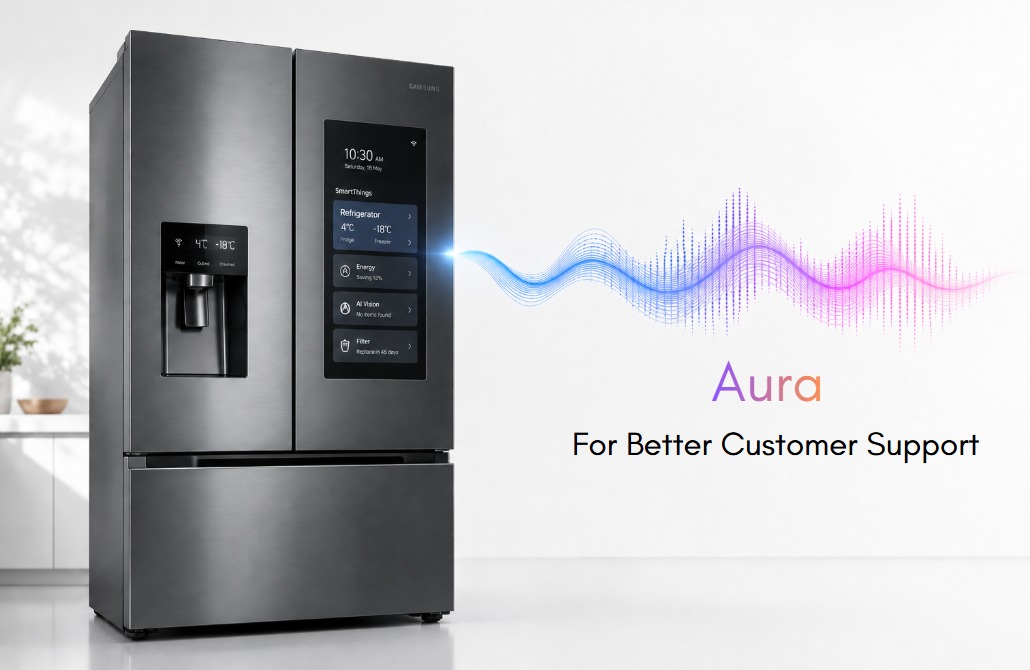
This is the exact problem ZippiAi’s AURA was built to address. AURA is an AI Product Companion — a way of giving a physical product a conversational interface, so customers can ask questions directly instead of hunting for answers elsewhere. With it, customers can understand what their product’s features actually do, complete setup with step-by-step guidance, troubleshoot common issues, interpret error messages, get maintenance guidance, and ask questions naturally, including by voice and in multiple languages.
None of this eliminates the need for human support; some issues genuinely require a technician or a live agent, and that won’t change. But it can help customers resolve common questions independently, make product information easier to access, and reduce the need to contact support for simple, informational issues.
Voice and multilingual assistance
Appliance use cases rarely happen at a desk. Customers installing a unit, cooking, or cleaning a filter usually have their hands full, so a voice interface that answers “what should I do next?” fits how appliances are actually used.
Brands also sell across borders, and customers may prefer asking questions in their native language even if they’re comfortable using the appliance itself. Multilingual AI assistance makes product information accessible without a separate translated-content operation for every market.
Turn customer questions into product insights
Customer questions aren’t just a cost center — they’re data. Repeated questions reveal confusing features, gaps in onboarding, unclear manuals, or underused capabilities. That creates a feedback loop: customer questions lead to insights, insights lead to a better product experience, and a better experience leads to fewer repetitive questions.
How brands can start reducing repetitive support interactions
• Identify repetitive questions across calls, chats, and emails
• Separate information problems from hardware problems
• Identify high-volume, low-complexity questions
• Make product information conversational, not just stored in PDFs
• Make assistance available at the moment of need
• Continuously feed recurring questions back into documentation and product design
Metrics CX teams should track
• Repetitive support interactions and self-service resolution rate
• First-contact resolution and average resolution time
• Customer satisfaction and repeat-contact rate
• Support cost per customer
• Product onboarding completion and customer questions per active product
Conclusion
The goal was never simply to build smarter appliances. It’s to make those appliances easier to understand and use. A connected product shouldn’t require its owner to become an expert before they can rely on it.
ZippiAi’s AURA turns products into conversational companions, helping brands give customers immediate access to product guidance, troubleshooting, and information when they need it most.
Want to explore how an AI Product Companion could improve the support experience for your connected products? Talk to ZippiAi.