Fixing Long Wait Times in OEM Customer Support
A customer waiting 20 minutes for a simple answer is not just experiencing a support problem—it may be experiencing a brand problem.
For original equipment manufacturers (OEMs), customer support is rarely simple. A single customer might need help troubleshooting a machine, checking a warranty, finding a replacement part, tracking a service request, or understanding a technical specification. When every question has to go through a human agent, support queues can quickly become overloaded.
The result is familiar: long wait times, frustrated customers, repetitive work for support teams, and rising service costs.
AI is changing that equation. By handling routine questions, providing immediate troubleshooting guidance, and directing complex issues to the right human agent, AI can help OEMs build a support operation that is faster without becoming less personal.
The Hidden Cost of Long OEM Support Wait Times
For OEM customers, a slow reply is rarely just an inconvenience—it is an operational problem. The person in the queue may be standing beside a machine that stopped mid-shift, or confirming warranty coverage before authorizing an urgent repair.
Equipment downtime, installation questions, technical faults, warranty concerns, maintenance needs, spare parts, service requests—each carries a cost that compounds by the minute. Production schedules slip, field teams sit idle, and buyers start to wonder how responsive the OEM will be when something serious goes wrong.
Long waits in OEM customer service therefore damage more than satisfaction scores: customers rarely separate the machine from the support behind it, and slow after-sales support becomes part of how the brand is judged.
Why OEM Customer Support Queues Get Overloaded
Overloaded queues rarely have a single cause. Volume usually comes first: a large share of contacts are variations of the same questions about maintenance schedules, warranty terms, part numbers, and service procedures, mixed with complex technical queries that take time to diagnose.
Trained staff are hard to scale, customers reach the wrong department and get transferred, and information sits scattered across manuals and internal systems, so even experienced agents spend time hunting for it. Because customers cannot see the status of a request, they follow up repeatedly—adding more contacts to the same queue.
The result is a familiar mismatch: a skilled agent spends five minutes explaining a maintenance interval printed in the manual while another customer with a machine down waits on hold. The queue treats both questions as equal; the business impact is anything but.
The Real Problem: Not Every Question Needs a Human
This points to something many OEMs sense but rarely act on: long wait times are less a staffing problem than a triage problem.
Support requests fall broadly into two categories. The first is simple and repetitive—FAQs, product information, warranty basics, maintenance schedules, service-process questions, first-step troubleshooting. These have known answers that do not change from customer to customer. The second is complex and sensitive—advanced technical faults, equipment failures, safety-related concerns, disputed warranty claims, anything calling for a technician's judgment.
Human expertise is essential for the second category and largely wasted on the first. AI suits the reverse: it resolves routine requests instantly and recognizes when a question belongs with a human expert, routing it there quickly. That is the gap a platform like ZippiAi is designed to close.
How ZippiAi Can Help OEMs Reduce Wait Times
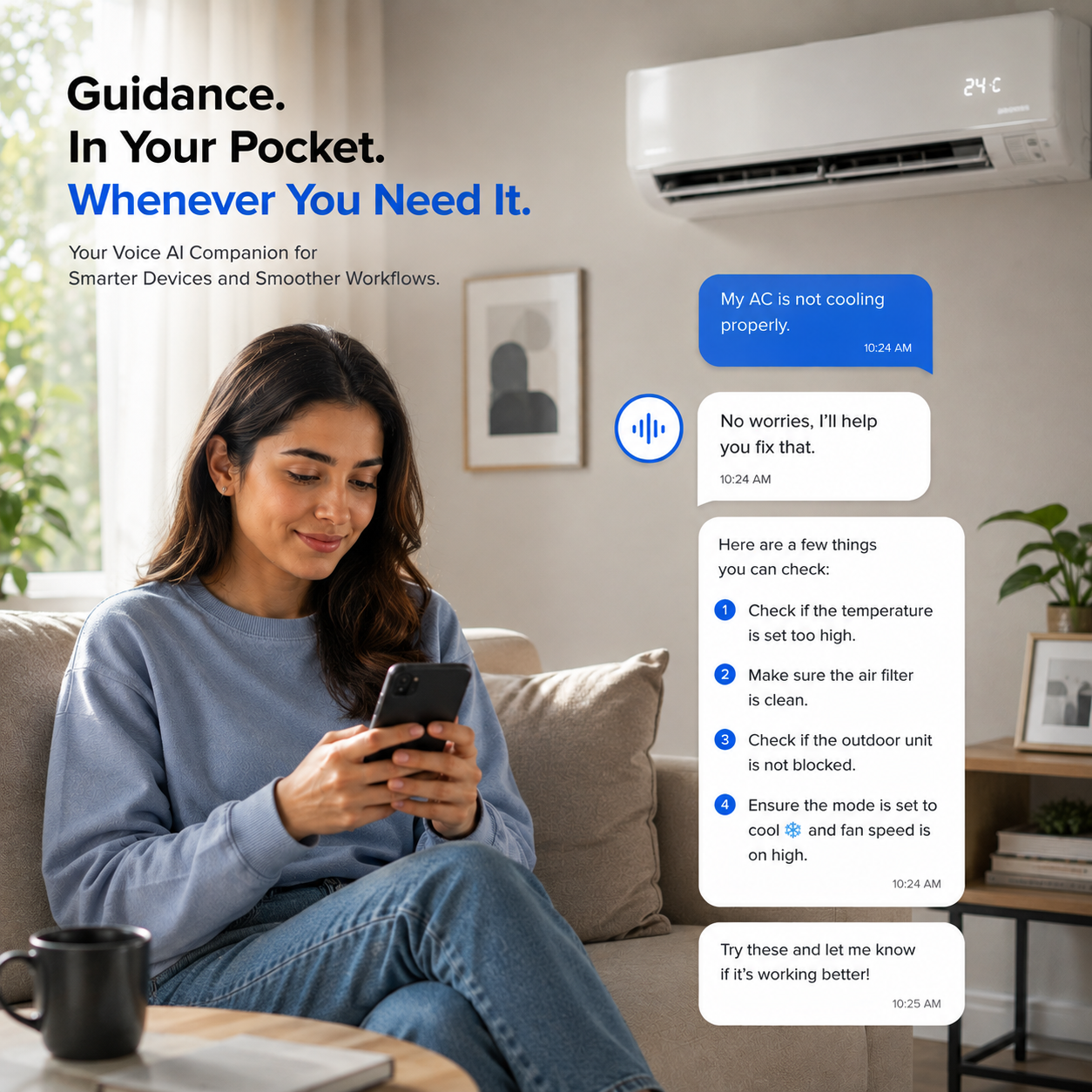
ZippiAi provides AI-powered customer support built around this kind of triage. Instead of every customer joining one queue, an AI assistant becomes the first point of contact—answering common questions instantly, at any hour, with no hold time.
Customers can find product and service information, check warranty and maintenance details, and work through basic troubleshooting in a natural conversation rather than a search through PDFs. For everything else, the AI understands the query, captures context, and directs it to the right person the first time.
With repetitive questions handled automatically, agents return to what they were trained for: resolving difficult technical issues for the customers who need them most.
AI Shouldn't Replace OEM Support Teams
This is where many AI conversations go wrong. OEM technical support depends on product knowledge, judgment, and accountability—especially when failures affect safety or production. No credible customer support automation strategy asks OEMs to hand those situations to software.
The right division of labor is simple: AI handles the simple and repetitive; humans handle the complex and critical.
Both sides gain. Customers get:
- Faster answers and less waiting
- Easier access to information
- Quicker routing to the right specialist
Support teams get:
- Fewer repetitive tickets and less peak-hour pressure
- More time for difficult cases
- Better use of hard-won technical expertise
From Long Queues to Faster Resolution
Reducing wait time is only part of the solution. What matters is the full journey: customer question → AI assistance → troubleshooting or information → smart escalation → human resolution. Every unnecessary step removed improves the experience.
Picture a plant engineer whose equipment shows a fault code at 9 p.m. They describe the issue to the AI assistant, which explains the code and walks through standard checks. If that resolves it, the case closes in minutes. If not, the details are captured and a specialist picks it up next morning with full context—no repeated explanations.
What OEMs Should Measure
AI adoption should be judged on evidence. Average wait time and first-response time show whether customers are helped sooner. Resolution time and first-contact resolution reveal whether answers are not just faster but final—an AI that responds instantly yet resolves nothing has moved the queue, not removed it.
Customer satisfaction and customer effort scores capture how support feels: how hard did someone work to get an answer? The volume of repetitive tickets handled automatically shows how much routine load AI has absorbed, while the escalation rate shows whether triage is working—too high and the AI is an extra step; too low and issues may be getting stuck. Agent productivity on complex cases shows whether expertise is going where it counts.
The Future of OEM Customer Support
Customer expectations are being reset outside the industrial world and imported into it. OEM buyers increasingly expect immediate responses, 24/7 availability, self-service options, and quick access to technical information—because every other service in their lives now provides them.
OEMs relying entirely on traditional queues will find that gap harder to defend each year. The path forward is not replacing the support organization but adding an intelligent layer in front of it: AI that resolves what it can and hands the rest to humans with context attached.
Conclusion: Remove the Waiting, Not the People
Long wait times in OEM customer support are rarely proof that a company lacks people. More often, too many customers are waiting for answers that could be delivered instantly—while the people who could solve hard problems are buried under easy ones.
The goal of AI in OEM customer support isn't to remove humans from the conversation. It's to remove unnecessary waiting from the conversation.
For OEMs ready to make that shift, ZippiAi offers a practical starting point: AI-powered customer service that answers routine questions instantly and gets complex cases to human experts faster. The queue gets shorter, the support gets better, and the brand gets judged by its product again—not its hold music.